
Why SPF 50 Sunscreen Should Be a Non-Negotiable in Your Daily Routine
Why SPF 50 Sunscreen Should Be a Non-Negotiable in Your Daily Routine
If there’s one skincare product dermatologists unanimously agree on, it’s sunscreen. Whether it’s sunny or cloudy, indoors or outdoors, SPF 50 sunscreen is your skin’s most powerful defence against premature ageing, pigmentation, and skin cancer. Yet in India, sunscreen remains one of the most underused skincare products — often skipped because of myths about dark skin tones not needing SPF, or concerns about white cast and greasiness. This guide debunks those myths and explains exactly why SPF 50 sunscreen should be a daily non-negotiable for every skin type.
What Does SPF 50 Mean?
SPF stands for Sun Protection Factor. SPF 50 means that when applied correctly, the sunscreen filters out approximately 98% of UVB rays — the radiation responsible for sunburn and a major contributor to skin cancer. For context, SPF 30 filters out about 97% of UVB rays. While the difference sounds small, over daily cumulative exposure across years, that additional 1% protection adds up significantly. SPF 50 is the recommended minimum for daily use in high UV index environments like India, where UV intensity is strong year-round.
UVA vs UVB: Understanding the Difference
There are two types of ultraviolet rays that affect your skin. UVB rays are shorter wavelength rays that primarily cause sunburn and play a key role in developing skin cancer. UVA rays penetrate deeper into the skin, causing long-term damage including premature ageing, wrinkles, and pigmentation — even through glass windows and on cloudy days. A broad-spectrum SPF 50 sunscreen like Nyxia Sunscreen SPF 50 protects against both UVA and UVB rays, giving your skin complete coverage regardless of the conditions.
Why Indian Skin Still Needs SPF 50
A common misconception is that darker skin tones don’t need sunscreen because melanin provides natural protection. While melanin does offer some SPF-equivalent protection (estimated at SPF 13 in very dark skin tones), this is nowhere near sufficient protection in India’s intense UV environment. Moreover, people with medium to dark skin tones are particularly prone to hyperpigmentation, melasma, and uneven skin tone — all of which are significantly worsened by UV exposure. Regular use of a broad-spectrum SPF 50 sunscreen is essential for preventing and managing these conditions regardless of your skin tone.
The Problem with White Cast
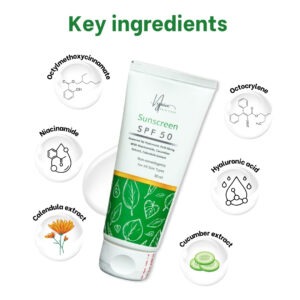
One of the biggest reasons people skip sunscreen is white cast — the ghostly white residue left behind by mineral sunscreens containing zinc oxide or titanium dioxide. This is especially problematic for medium and dark skin tones. The solution is to choose a modern hybrid or chemical sunscreen formulated for Indian skin. Nyxia Sunscreen SPF 50 is formulated with a no-white-cast technology that blends invisibly into all skin tones, making it comfortable and practical for daily use — even under makeup. It also has a lightweight, non-greasy texture that works well for oily and combination skin types.
Sunscreen and Pigmentation: The Direct Link
Hyperpigmentation — including sunspots, melasma, and post-inflammatory hyperpigmentation (PIH) from acne — is one of the most common skin concerns in India. UV radiation directly triggers melanin production, making existing dark spots darker and creating new ones. If you’re using any brightening or pigmentation treatment products like Vitamin C serum, niacinamide, or retinol, without daily sunscreen, you’re essentially undoing all the work those products do. Sunscreen is the final and most critical step in any anti-pigmentation routine. Explore our full Pigmentation Care range for a comprehensive approach.
Sunscreen and Anti-Ageing
Up to 80% of visible facial ageing — fine lines, wrinkles, loss of elasticity, and dull skin — is caused by UV exposure rather than the natural ageing process. This is known as photoageing. Regular use of SPF 50 sunscreen is therefore the single most effective anti-ageing intervention available, more impactful than any serum, cream, or treatment. Starting your anti-ageing skincare journey without daily sunscreen is like trying to fill a leaking bucket. Pair your sunscreen with Retinol Cream and Botox Anti-Ageing Cream for a comprehensive anti-ageing approach.
How to Apply Sunscreen Correctly
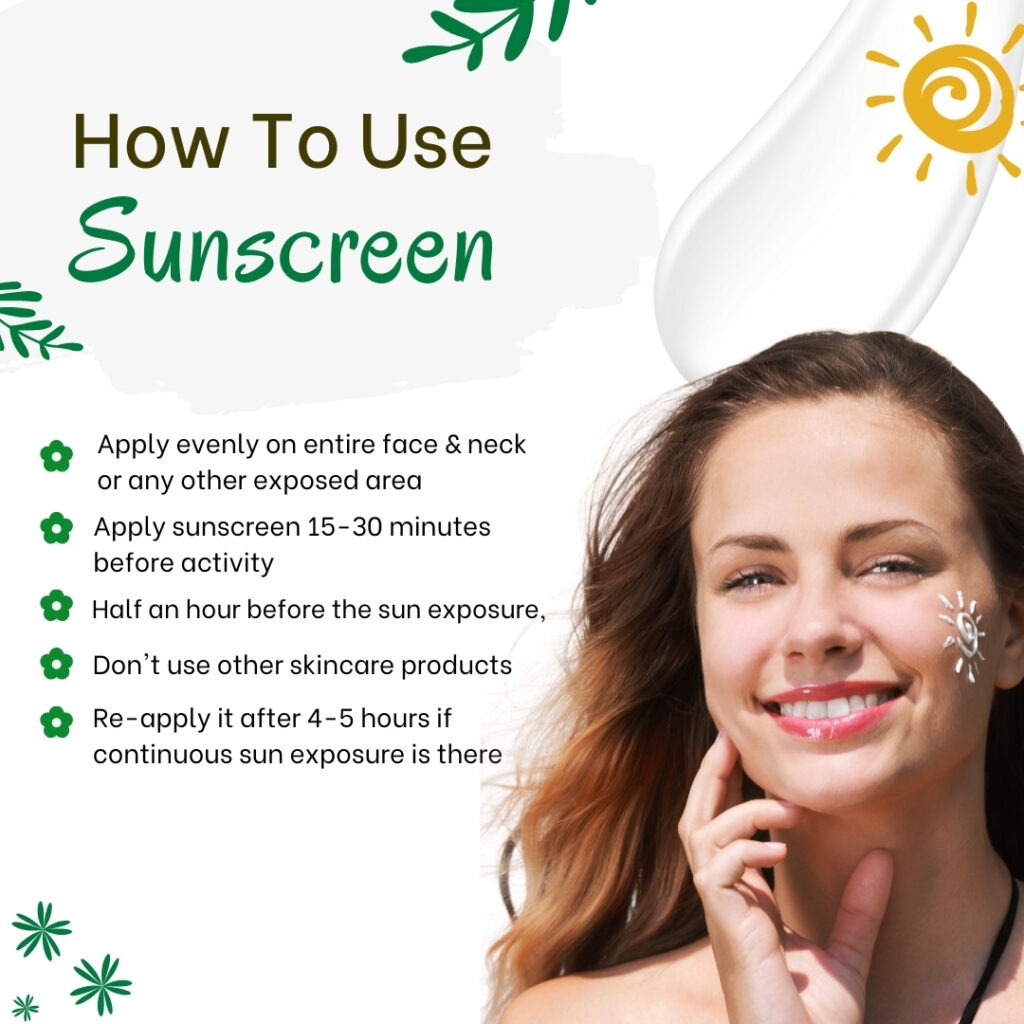
Most people apply far too little sunscreen, significantly reducing its effectiveness. The standard recommendation is two milligrams per square centimetre of skin — for the face alone, that’s about a quarter teaspoon or two finger-lengths of product. Apply sunscreen as the last step of your morning skincare routine, after moisturiser but before makeup. Reapply every two hours if you’re outdoors, or after swimming or sweating. Don’t forget the neck, ears, and the back of your hands — commonly neglected areas that show signs of ageing and sun damage early.
Your Complete Morning Skincare Routine
The ideal morning skincare routine for sun-protected, healthy skin includes: a gentle Foaming Face Wash to cleanse; a Vitamin C or Niacinamide serum for brightening and antioxidant protection; a lightweight Moisturiser for Oily Skin or appropriate moisturiser for your skin type; and finally, a generous application of Nyxia Sunscreen SPF 50 as the last step. This four-step routine provides a comprehensive defence against UV damage, oxidative stress, and dehydration.
Indoor UV Exposure: A Hidden Risk
Many people believe sunscreen is only necessary when going outdoors. However, UVA rays — the longer, deeper-penetrating rays — pass through glass windows and can affect your skin even while you’re sitting indoors. If you work near a window or spend significant time in a car, you’re still receiving meaningful UV exposure. Applying sunscreen daily as part of your morning routine, regardless of whether you plan to go outside, protects against this cumulative indoor UV damage. Blue light from screens is also a concern for skin pigmentation, and some modern sunscreens now include protection against it.
Frequently Asked Questions About SPF 50 Sunscreen
Can I use SPF 50 sunscreen on my face every day? Yes, and you absolutely should. Daily sunscreen application is the most important step in any skincare routine, for all skin types and all seasons.
Does SPF 50 sunscreen cause acne? Old sunscreens were often greasy and comedogenic. Modern, dermatologist-formulated sunscreens like Nyxia SPF 50 are specifically designed to be non-comedogenic and suitable for acne-prone and oily skin.
Should I apply sunscreen on a cloudy day? Yes. Up to 80% of UV rays penetrate through clouds. Overcast days can give a false sense of security, but UV damage continues even without visible sunlight.
Can I mix sunscreen with my moisturiser? It is not recommended. Mixing dilutes the SPF concentration and changes the formulation, reducing effectiveness. Apply them as separate layers — moisturiser first, sunscreen on top.
Conclusion: Make SPF 50 Your Daily Habit
Incorporating SPF 50 sunscreen into your daily routine is one of the simplest and most effective investments you can make in your long-term skin health. It prevents pigmentation, slows premature ageing, protects against skin cancer, and ensures your other skincare products can work effectively. Don’t let myths about white cast, dark skin tones, or indoor skin keep you from this essential step.
Try Nyxia Sunscreen SPF 50 — dermatologist-formulated, no white cast, and suitable for all skin types. Make it your most consistent daily habit.


No Comments